

At the turn of the twentieth century, jewellery entered a period of radical transformation. No longer defined solely by the intrinsic value of gemstones or materials, it became a medium for symbolic and artistic expression. At the centre of this transformation stood René Lalique, a designer who challenged the very definition of jewellery.
René Lalique jewellery is not characterised by symmetry or restraint in the traditional sense. Instead, it embraces movement, symbolism, and an almost dreamlike interpretation of nature. This approach reflects the spirit of Art Nouveau, where organic forms, flowing lines, and mythological references replaced rigid historical styles.
The history of René Lalique jewellery
Born in 1860, René Jules Lalique began his career as a designer working for established Parisian jewellers. In this early phase, his work aligned with prevailing conventions, where precious stones and traditional settings remained central.
Over time, his direction shifted. This shift was not driven by market demand, but by an increasingly independent artistic vision. By the late nineteenth century, Lalique began to move away from established hierarchies of value. Instead of focusing on gemstones, he explored composition, material contrast, and surface.
His participation in international exhibitions, including the Paris Exposition Universelle, brought him recognition as a leading figure within Art Nouveau.
Around 1900, René Lalique jewellery reached its most innovative phase. During this period, he developed a highly personal visual language, defined by fluid forms, natural motifs, and experimental techniques.
After 1910, Lalique gradually shifted his focus towards glass. This transition allowed him to further explore light and transparency on a different scale.

Lalique and the evolution of jewellery
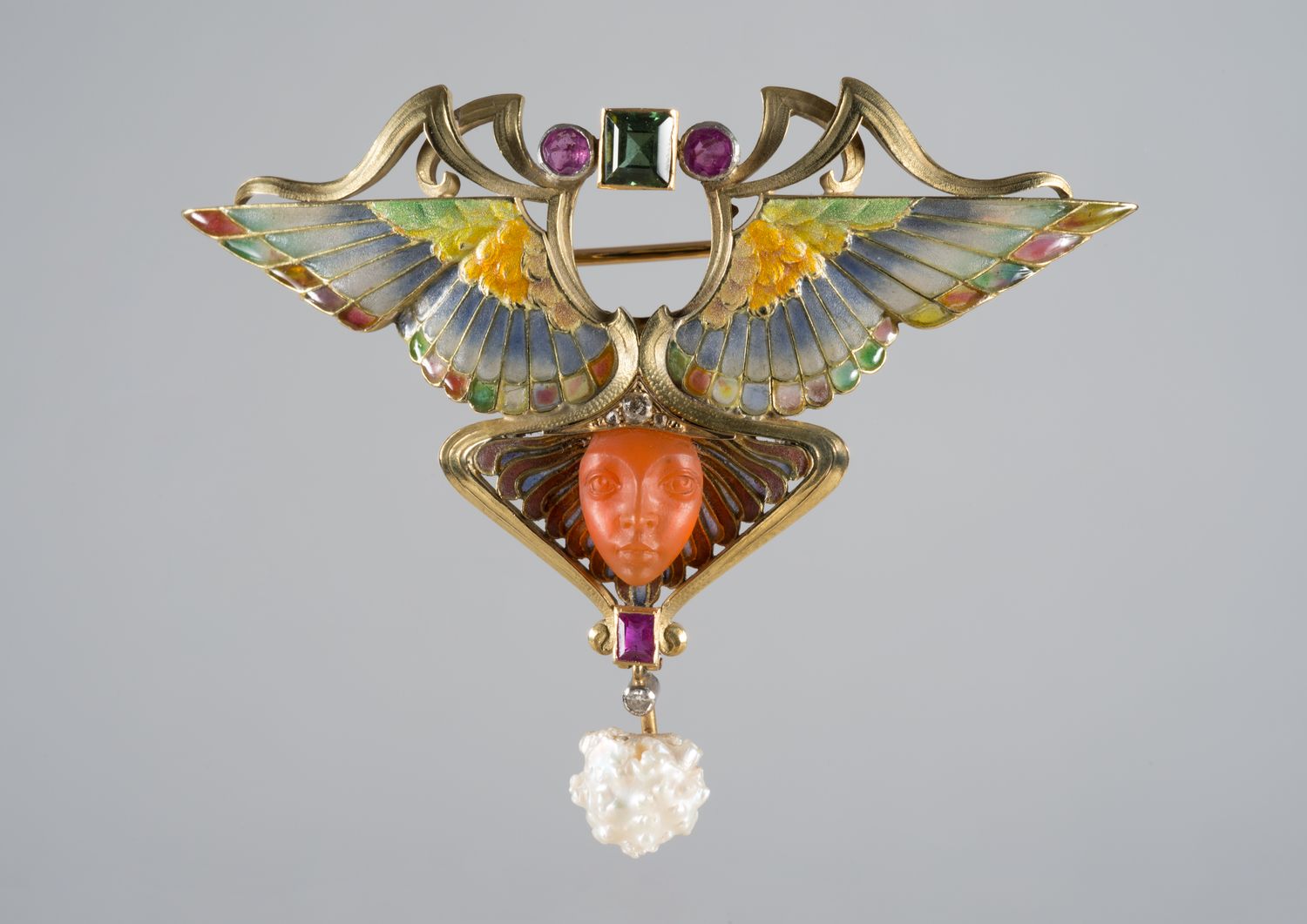
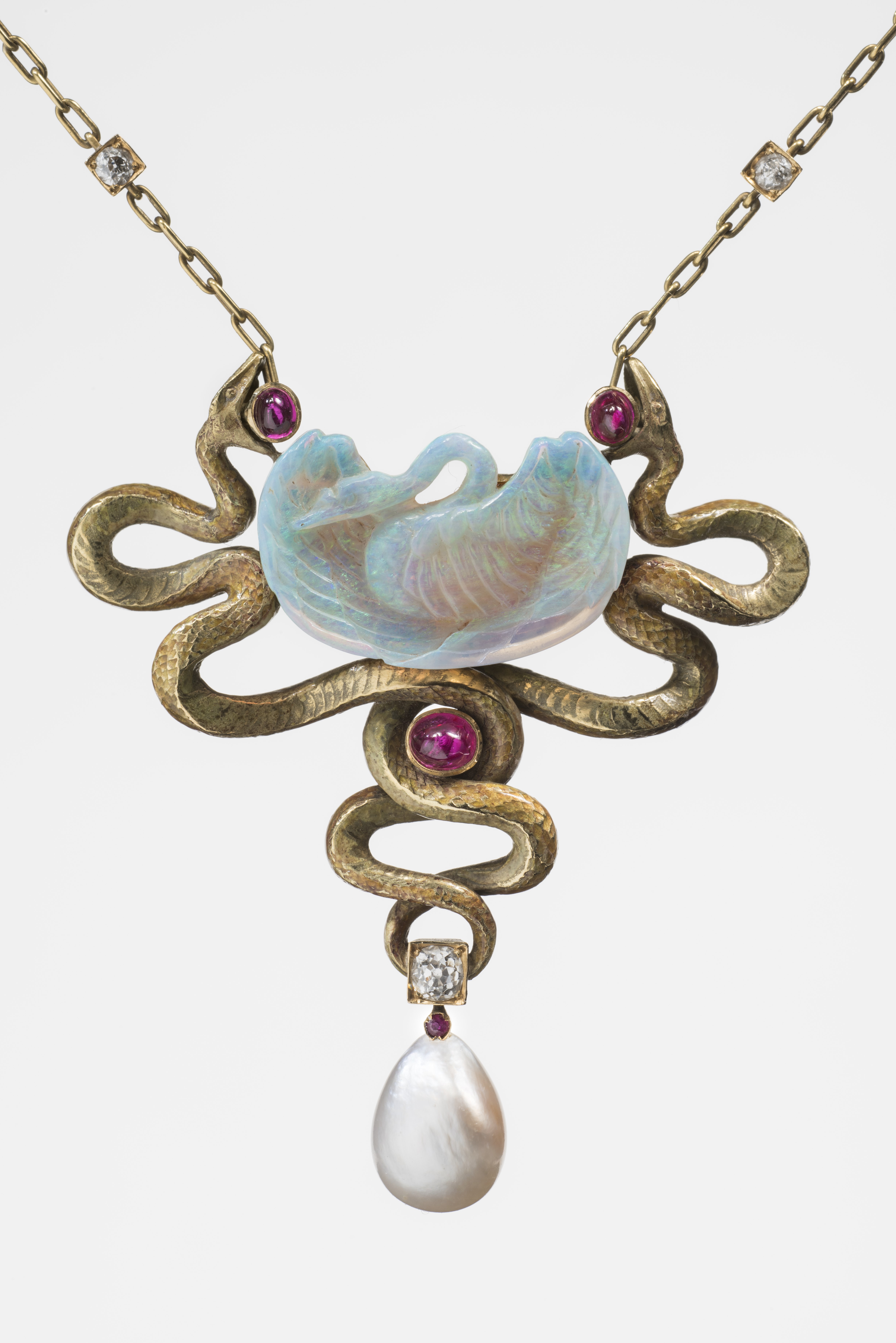
Lalique played a central role in redefining how jewellery could be conceived. Rather than accepting materials as indicators of worth, he used them as elements within a broader composition. Instead of relying on precious stones alone, Lalique explored materials such as horn, as seen in his hair combs, ivory, glass, and enamel, which appear alongside, or instead of, precious stones. In doing so, he disrupted long-standing assumptions about what defined value in jewellery.
Through this approach, René Lalique jewellery contributed to a different understanding of value, where composition and artistic expression became as significant as material rarity.
This development did not reject craftsmanship. Instead, it required a different kind of precision: one focused on integration rather than display.
Enamel and the role of light
One of the most distinctive aspects of René Lalique jewellery is his use of enamel.
Among the techniques he employed, plique-à-jour enamel stands out for its complexity. Without a metal backing, the enamel allows light to pass through the surface, creating an effect comparable to stained glass. This technique appears frequently in motifs such as wings, petals, and flowing forms. In Lalique’s work, enamel is not used to imitate reality, but to transform it through light.
Lalique also worked with basse-taille and champlevé, using them to build layers of colour and depth. These techniques allowed for subtle tonal variations, reinforcing the organic quality of his designs.
In this context, enamel is not decorative. It functions as a structural and visual element, shaping how the piece interacts with light.
Nature, symbolism, and transformation

If material defines one aspect of Lalique’s work, imagery defines another.
Recurring motifs include dragonflies, orchids, serpents, and the female figure. These elements often merge, creating compositions that suggest transformation, tension, and ambiguity rather than stability.
This approach is closely connected to Symbolism, where imagery is used to evoke meaning rather than to describe reality.
In René Lalique jewellery, nature is not reproduced directly. It is interpreted, stylised, and reconfigured into new forms.

Jewellery as art object
Lalique approached jewellery as an artistic medium. His pieces were exhibited internationally and collected as objects of contemplation as much as adornment. In some cases, wearability became secondary to expression.
This perspective contributed to a broader shift within the field. Jewellery became something that could be studied and observed, not only worn.
In this way, René Lalique jewellery occupies a position between disciplines, drawing on both decorative arts and fine art.
The value of design in René Lalique jewellery
The significance of René Lalique jewellery can be understood through three interconnected aspects:
Design: A visual language defined by fluid lines, asymmetry, and transformation.
Technique: Advanced use of enamel and unconventional materials, integrated into the structure of the piece.
Artistic role: A central role in positioning jewellery as an artistic discipline.
Together, these elements place Lalique among the most important figures within the history of jewellery.
Continuity and influence
Although Lalique’s focus shifted towards glassmaking, the ideas developed in his jewellery continued to resonate.
His approach to material, light, and composition remains visible in contemporary jewellery design, particularly in contemporary approaches that blur the boundary between jewellery and art object. The emphasis on artistic intent over intrinsic value continues to shape how jewellery is understood today.
Rather than belonging solely to a specific moment, René Lalique jewellery functions as an ongoing reference point.
René Lalique within a broader jewellery landscape
To understand René Lalique is to place his work within a wider context of jewellery design.
Where some houses are defined by structure, symmetry, or material hierarchy, Lalique represents a different approach: one centred on transformation, symbolism, and the integration of materials. In contrast, houses such as Boucheron explore alternative directions, often emphasising texture, material presence, and a more sculptural treatment of form, while remaining within the framework of high jewellery.
Together, these perspectives contribute to a broader understanding of jewellery as a discipline, shaped by multiple directions rather than a single definition.
Understanding jewellery through René Lalique
René Lalique offers a way of understanding jewellery through experimentation and artistic intent. His work demonstrates how meaning can emerge through material, technique, and form.
Seen in this way, jewellery is not fixed. It develops through time, shaped by those who create it and those who engage with it.
And as with all objects of lasting significance, its meaning reveals itself gradually, through attention and continued observation.


Leave a Reply