
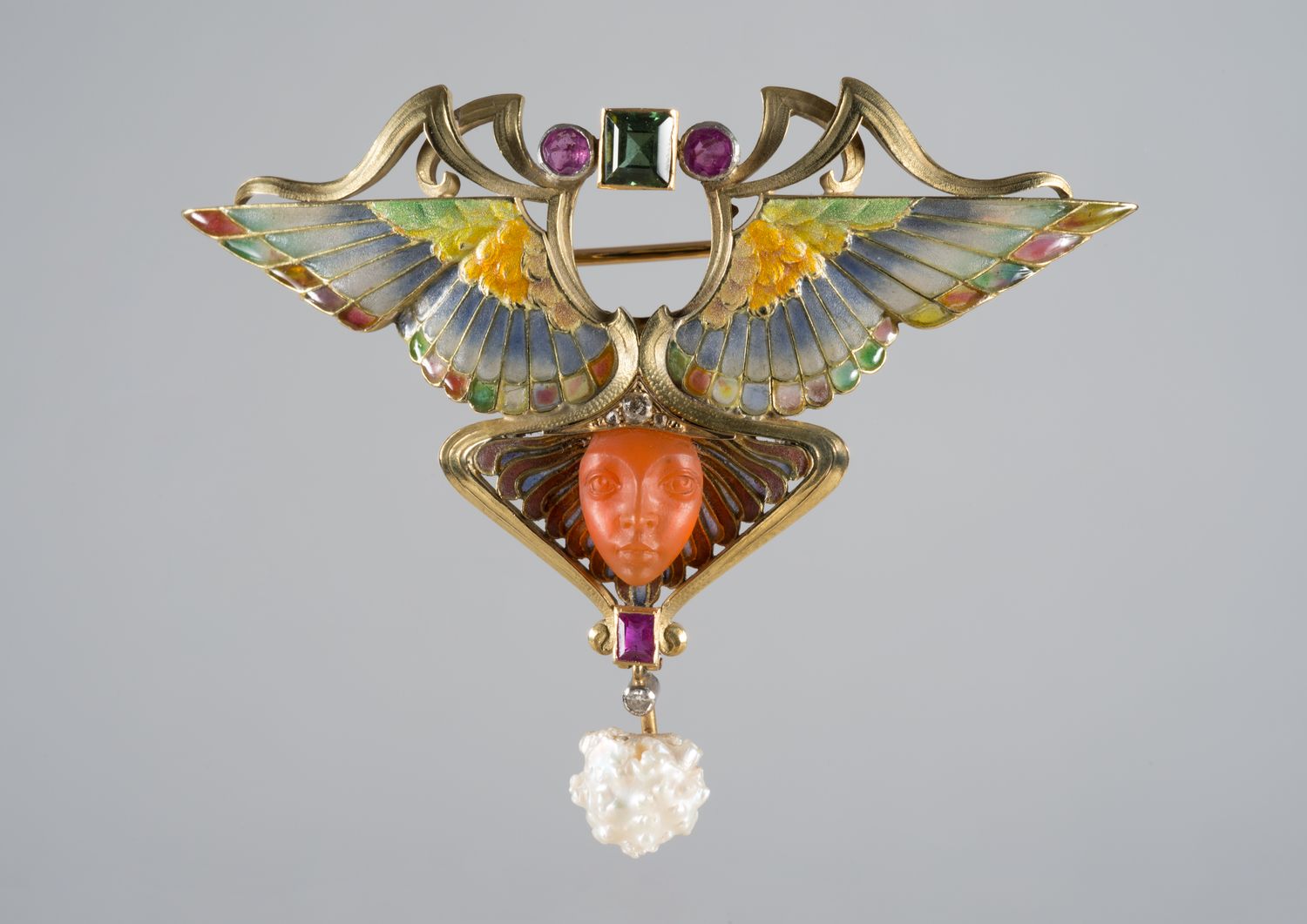
Jewellery has rarely functioned as decoration alone. Across centuries, it has served as a carrier of meaning, communicating ideas through material, motif, and form. Certain objects do more than ornament the body; they suggest transformation, emotion, memory, and association. This symbolic dimension gives jewellery a complexity that extends beyond craftsmanship or visual beauty.
Particularly during the late nineteenth and early twentieth centuries, symbolism became central to how jewellery was conceived. Rather than treating natural forms as decorative references, designers transformed them into visual language. Flowers, insects, serpents, birds, and water motifs were not merely reproduced for aesthetic effect. They became vehicles for atmosphere and metaphor.
To understand symbolic jewellery is to look beyond appearance. It requires attention to the ways form can suggest meaning without explicit explanation.
Symbolism beyond decoration
In symbolic jewellery, motifs are rarely neutral. Their significance often lies in cultural memory, mythology, and emotional association.
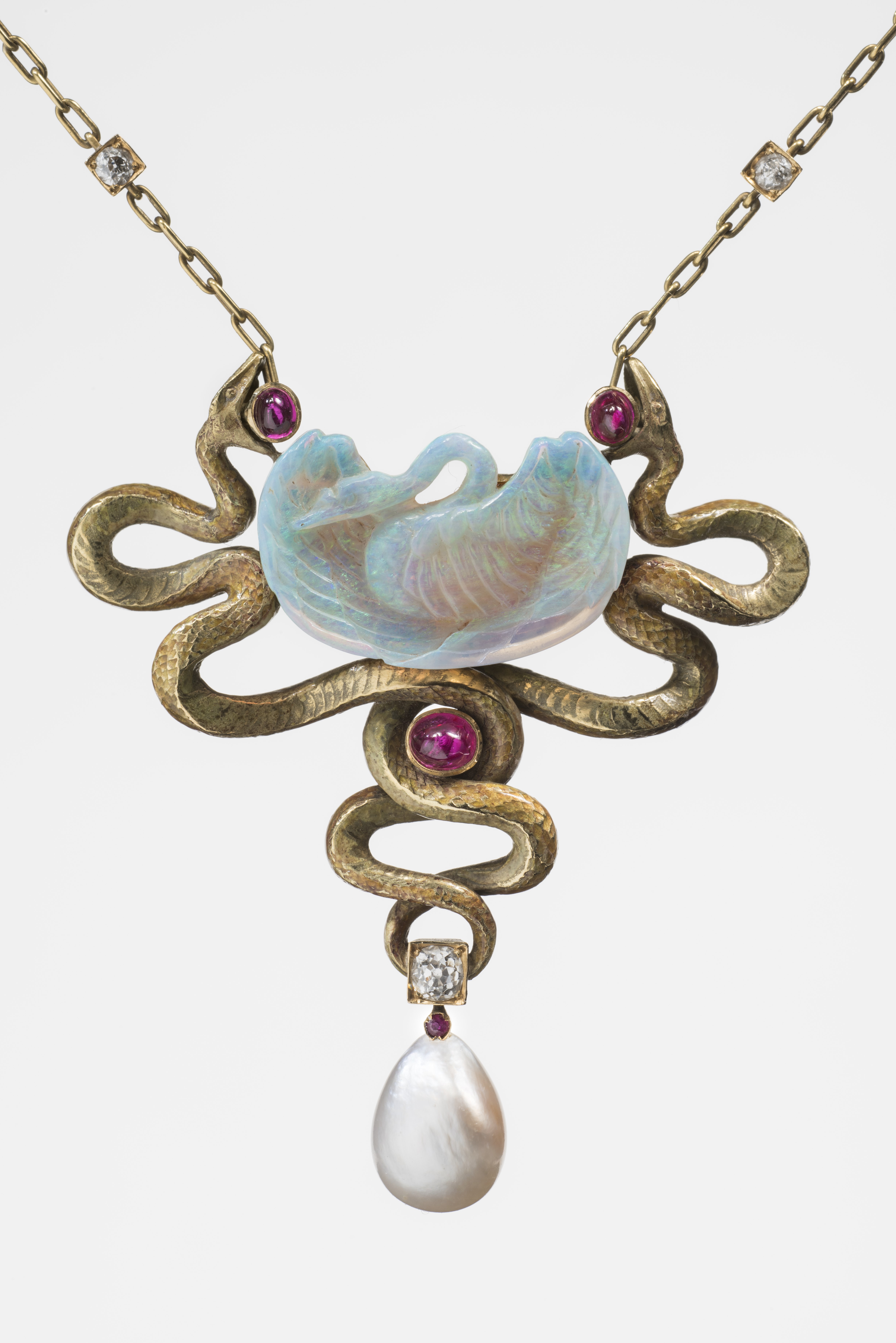
A serpent may evoke renewal, seduction, danger, or eternity. Insects, birds, flower and mythological figures often suggest transformation and impermanence. The iris often carries associations with transition and introspection, while the swan may suggest purity, duality, or melancholy.
These meanings are rarely fixed. Their power comes from ambiguity.
Unlike literal narrative objects, symbolic jewellery does not explain itself. It invites interpretation. The wearer and viewer participate in constructing meaning through recognition and association.
This interpretive openness gives symbolic jewellery much of its enduring fascination.

Nature as metaphor
The natural world has long provided jewellery with visual vocabulary, but symbolism transforms observation into interpretation.
During the Art Nouveau period, designers such as René Lalique and Philippe Wolfers approached nature not as a source of decorative realism, but as a field of emotional and psychological possibility.
A flower was not simply botanical form.
An insect was not simply studied anatomy.
Instead, these forms became abstracted and stylised to evoke tension, movement, fragility, mystery, or metamorphosis.
This shift marked an important departure from earlier decorative traditions. Jewellery became less concerned with displaying wealth through material excess and more concerned with creating atmosphere through formal suggestion.
As explored in the earlier essay on Philippe Wolfers, symbolic form often emerged through asymmetry, sculptural composition, and material tension.

Material as symbolic language
Meaning in jewellery is not carried by motif alone.
Material itself can become symbolic.
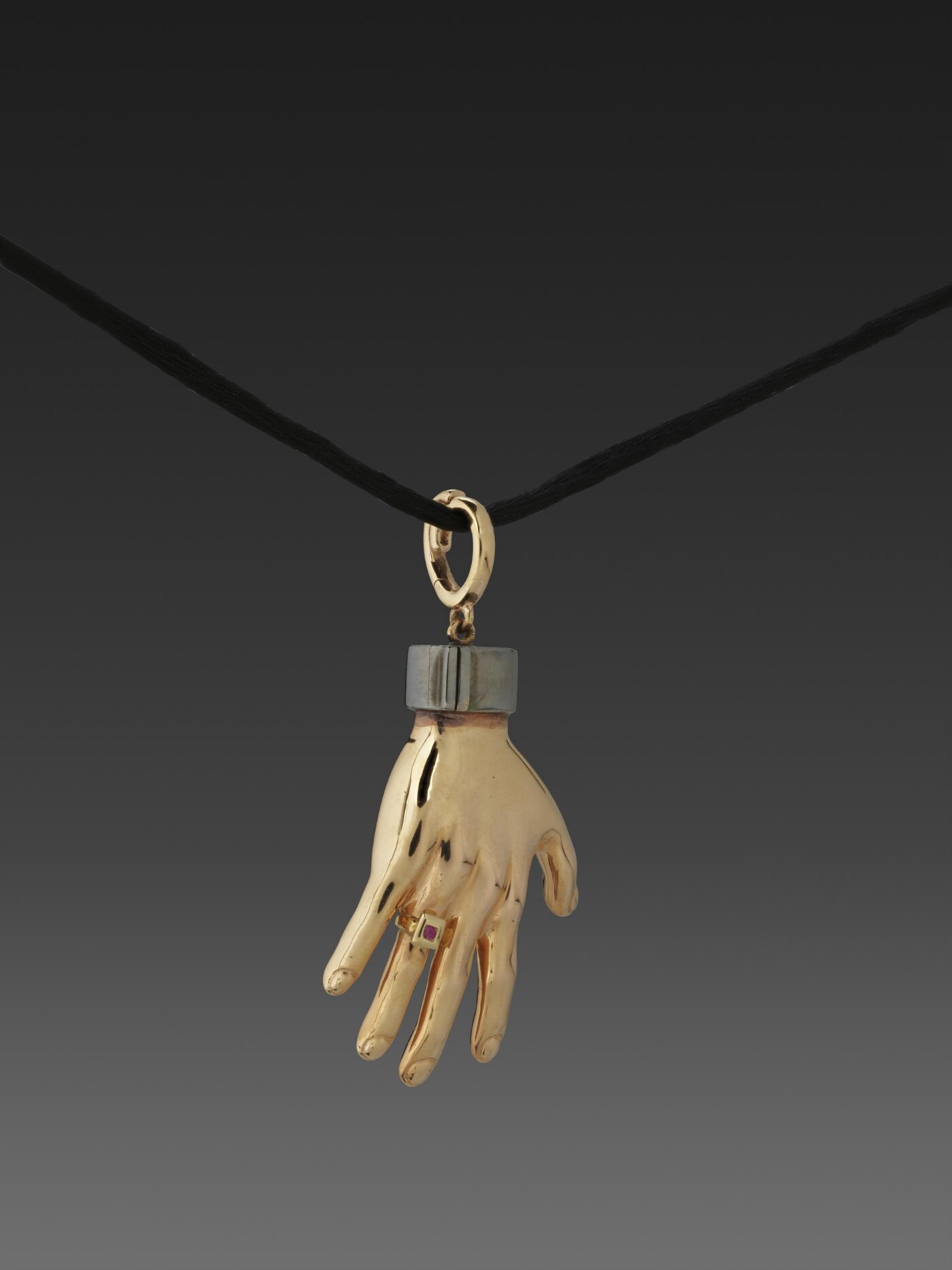
Translucent enamel can evoke fragility or ephemerality. Opals suggest shifting perception through their unstable play of colour. Pearls often signify purity, lunar associations, or restraint, while darkened metal may create mood through visual weight and shadow.
In symbolic jewellery, material is rarely passive. It contributes to emotional effect.
This is particularly evident in plique-à-jour enamel, where transmitted light creates an almost immaterial presence. The material seems to dissolve structure, producing objects that appear suspended between solidity and disappearance.
Such effects transform jewellery into something experiential rather than purely decorative.
,_KMKG-MRAH.jpg)
Ambiguity and transformation
One of the defining characteristics of symbolic jewellery is ambiguity.
Many of the most compelling symbolic works occupy unstable territory between categories. A form may appear simultaneously floral and animal, natural and abstract, delicate and unsettling.
This ambiguity creates tension.
It prevents immediate resolution and encourages prolonged looking.
The strongest symbolic jewellery often resists singular interpretation. It remains suggestive rather than descriptive, allowing meaning to shift depending on context, wearer, and perspective.
This instability is central to its power.
Like poetry, symbolic jewellery often communicates most effectively through implication.
Why symbolism continues to matter
Although strongly associated with Art Nouveau, symbolism remains relevant in contemporary jewellery.
Modern designers continue to use abstraction, material contrast, and suggestive form to create objects that communicate beyond ornament.
What has changed is often the visual vocabulary, not the underlying impulse.
The desire to create jewellery that carries emotional or conceptual resonance remains fundamental to the discipline.
Symbolic jewellery reminds us that adornment is never entirely surface. It exists in dialogue with memory, association, identity, and imagination.
The most powerful pieces do not simply decorate the body.
They invite reflection, interpretation, and encounter.

Leave a Reply