
Long before jewellery became associated with luxury or status, it served a more fundamental purpose. Jewellery did not begin as decoration, but as protection, identity and belonging. The earliest pieces were not made from precious metals, but from shells, bones, stones, and fragments of the natural world.
Archaeological discoveries suggest that some of the earliest forms of jewellery date back over 100,000 years. Even in these early stages, the impulse to adorn the body reveals something enduring: jewellery has always been a way to communicate without words.

Ancient civilisations and the rise of craftsmanship
As societies became more structured, jewellery evolved alongside them, and began to reflect systems of power, belief and identity. In ancient Egypt, jewellery was closely tied to religion and the afterlife. Gold, valued for its incorruptibility, was not only precious but symbolic of immortality and the divine. Techniques such as inlay and granulation began to emerge, reflecting a growing sophistication in craftsmanship.
In ancient Greece and Rome, jewellery became more varied in form and symbolism. It marked status, wealth, and personal taste. Gemstones were increasingly used, not only for their beauty but also for their believed protective or healing properties. Jewellery, in this context, was never neutral. It signalled both personal identity and social position.

The Middle Ages: symbolism and scarcity
During the Middle Ages, jewellery became more restricted. Sumptuary laws in parts of Europe dictated who could wear certain materials or gemstones. Pieces were often heavy with symbolism, reflecting religious devotion or social hierarchy.
At the same time, technical knowledge continued to develop. Stone cutting improved, allowing gemstones to interact with light in more complex ways. Jewellery remained rare, but its meaning deepened.

The Renaissance and the rediscovery of form
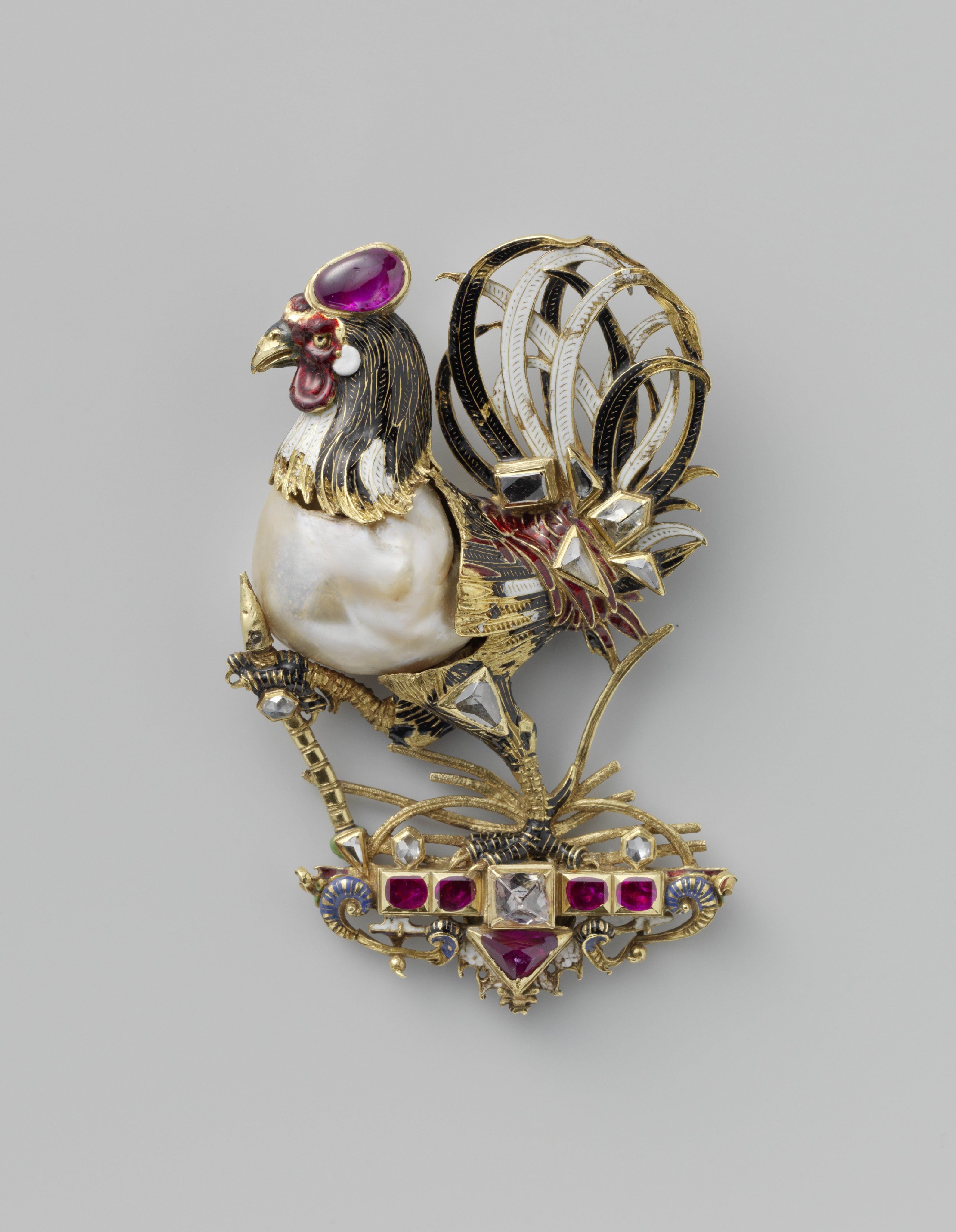
The Renaissance marked a turning point in the history of jewellery. A renewed interest in classical antiquity brought with it a focus on proportion, harmony, and artistic expression. Jewellery became more sculptural, more intricate, and more personal.
Enamelling techniques flourished, and gemstones were cut with greater precision. Pieces from this period often combined technical mastery with narrative elements, blurring the boundary between jewellery and miniature art.
The emergence of new materials: platinum and white gold
While gold had been central to jewellery for millennia, the introduction of new metals transformed both aesthetics and technical possibilities.
Platinum, although identified earlier, only came into widespread use in jewellery in the late 19th and early 20th century. Its exceptional strength allowed for finer, more delicate settings, particularly suited to diamonds. This made it a defining material in early modern jewellery design. Notably, Cartier was among the first houses to fully embrace platinum, using it to create light, intricate structures that would have been impossible in gold alone.
White gold, developed in the early 20th century as an alternative to platinum, offered a different balance between durability, cost, and appearance. Its emergence reflects a broader shift: jewellery was no longer shaped solely by tradition, but increasingly by innovation and changing market conditions.

Industrialisation and accessibility
The Industrial Revolution changed the landscape of jewellery dramatically. Mechanisation made certain techniques more accessible, and jewellery was no longer reserved exclusively for the elite.
At the same time, this period saw the rise of distinct styles reacting to industrialisation itself. Movements such as Arts and Crafts emphasised handwork and authenticity, while later periods embraced modernity and abstraction.
For the first time, jewellery began to exist in multiple worlds at once: as mass-produced object, as artisanal creation, and as artistic statement.
The modern perspective: meaning, design, and individuality
In a contemporary context, jewellery is defined less by strict conventions and more by diversity in material, form, and intention. Alongside traditional precious metals, unconventional materials have found their place within the field. Design may be minimal or expressive, conceptual or purely aesthetic.
What remains constant is the role jewellery plays in personal expression. Whether inherited, collected, or newly acquired, each piece carries a narrative, shaped by both its history and the individual who wears it.
A foundation for further exploration
Understanding the history of jewellery offers more than a chronological overview. It provides a framework for recognising why certain materials, forms, and techniques continue to matter today.
This broader narrative forms the foundation for more focused explorations of specific periods, materials, and houses — from the development of gemstone cutting to the evolution of iconic designs.
Because jewellery, perhaps more than any other object, exists at the intersection of time: shaped by the past, worn in the present, and carried into the future.


Leave a Reply