

Boucheron occupies a distinct position within high jewellery. Where some houses are defined by line or technical illusion, Boucheron is often recognised for its exploration of material, surface, and transformation.
Its work moves between tradition and experimentation, treating jewellery not only as composition, but as a medium through which materials can be reinterpreted.
For those studying jewellery, Boucheron offers insight into how design can emerge from the properties of materials themselves, rather than from structure or composition alone.

From workshop to Place Vendôme
Founded in Paris in 1858 by Frédéric Boucheron, Boucheron established itself during a period of rapid change in the decorative arts.
In 1893, the house became the first jeweller to open a boutique at Place Vendôme. This move was not only geographical, but symbolic. It positioned Boucheron within a centre that would come to define high jewellery in Paris.
From the outset, the maison developed a reputation for curiosity and independence, particularly in its approach to materials, qualities that would continue to shape its approach in the decades that followed.
Material as a starting point
A defining aspect of Boucheron is its focus on material.
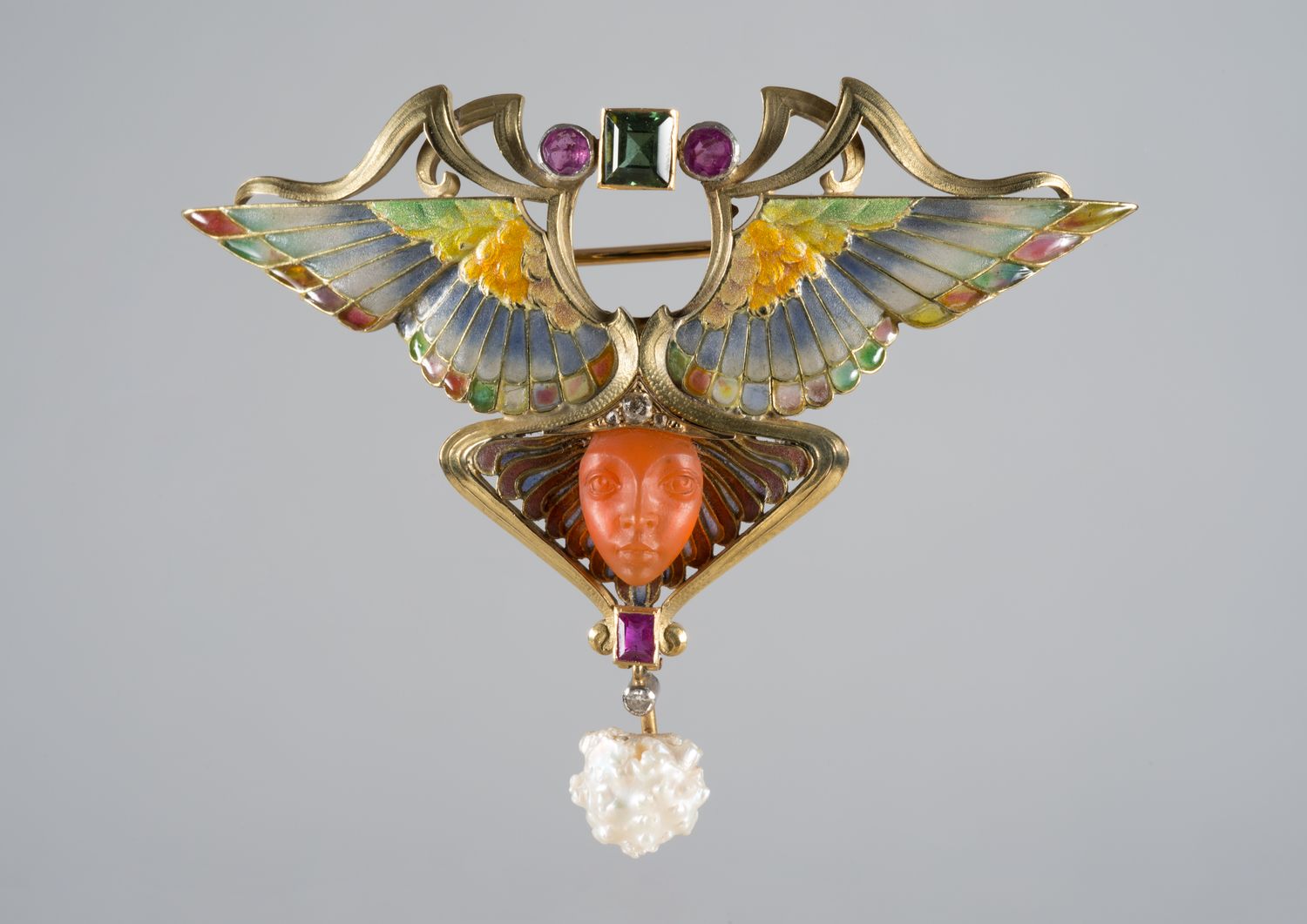
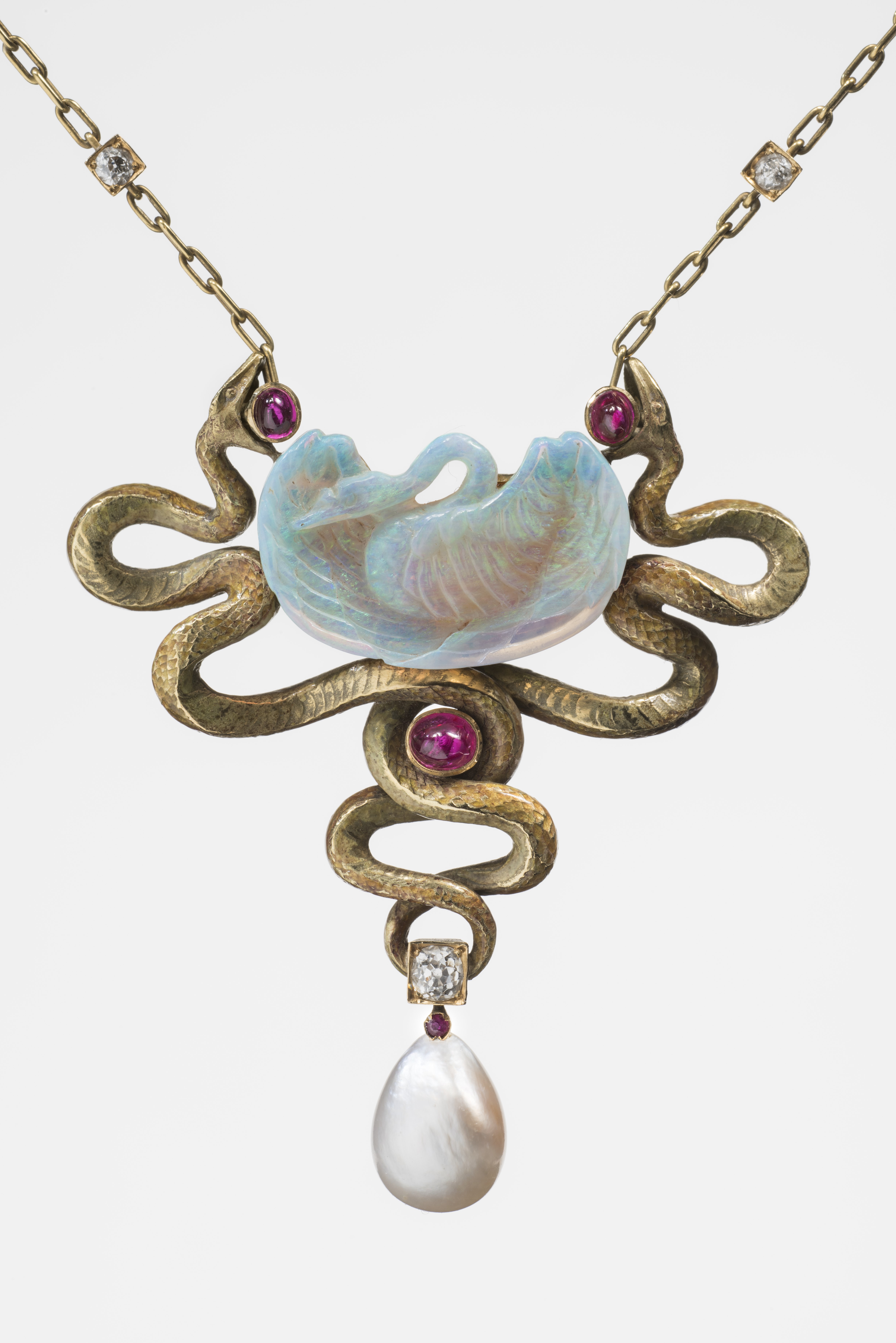
Rather than treating gemstones and metals as fixed elements within a design, the house often approaches them as points of departure. Surface, texture, and colour are explored in ways that challenge conventional expectations.
This approach allows jewellery to move beyond static form. Materials appear transformed: stone may resemble fabric, metal may evoke fluid movement. The boundary between substance and perception becomes less fixed, yet always grounded in precise craftsmanship.

Texture and surface: the language of Boucheron
If some houses are defined by line, Boucheron is often defined by surface.
Engraving, layering, and the treatment of metal create pieces that invite close observation. Light does not simply reflect; it interacts with texture, producing variation across the surface of a single object.
From an educational perspective, this highlights how jewellery can be understood not only through outline or structure, but through the manipulation of surface itself, as a controlled and deliberate design element..
Nature as interpretation
Nature has long been present in the work of Boucheron, but rarely in a literal sense.
Leaves, flowers, and animals appear not as direct representations, but as interpretations shaped by material and technique. Forms are often simplified, abstracted, or transformed.
This approach demonstrates how reference can function without imitation. Jewellery does not reproduce nature; it translates it through material and surface treatment.

The Question Mark necklace: rethinking form
One of the most distinctive contributions by Boucheron is the Question Mark necklace, introduced in the late nineteenth century.
Designed without a clasp, it curves around the neck in a continuous line. This innovation reconsiders not only how a piece looks, but how it is worn.
It reflects a broader principle within the house: form is not fixed. It can adapt to the body, rather than the body adapting to the object, while maintaining structural precision..
Value through experimentation
The value of Boucheron lies in a combination of material knowledge, craftsmanship, and a willingness to experiment.
Material: An emphasis on the expressive potential of stone and metal.
Craftsmanship: Techniques that allow for detailed surface treatment and transformation.
Experimentation: A consistent openness to new forms, structures, and ideas.
Together, these elements position the house within a lineage of innovation that differs from more formal or codified approaches, where material exploration becomes the primary driver of design.
Between tradition and innovation
Today, Boucheron continues to explore the relationship between past and present.
Historical ideas are not simply preserved, but revisited through new materials and techniques. This creates a dialogue between continuity and change, where each informs the other.
Rather than maintaining a fixed identity, the house allows its language to evolve, particularly through ongoing material experimentation.

Boucheron in relation to other maisons
To understand Boucheron is to recognise its position alongside other historic houses.
Where Cartier is often associated with line and structure, and Van Cleef & Arpels with technique and visual coherence, Boucheron distinguishes itself through material exploration and surface, often pushing materials beyond their expected visual behaviour.
These differences are not oppositional, but complementary. Together, they reveal the range of approaches that define high jewellery.
Understanding Boucheron through material
Seen in this way, Boucheron offers a perspective on jewellery grounded in material and transformation.
Its work demonstrates how meaning can emerge through texture, surface, and the reinterpretation of familiar forms. Jewellery becomes not only something to observe, but something to study in terms of how it is made and how it evolves.
Through this lens, the house contributes to a broader understanding of jewellery as a discipline: one shaped by experimentation as much as by tradition, with material as its primary point of departure.


Leave a Reply