
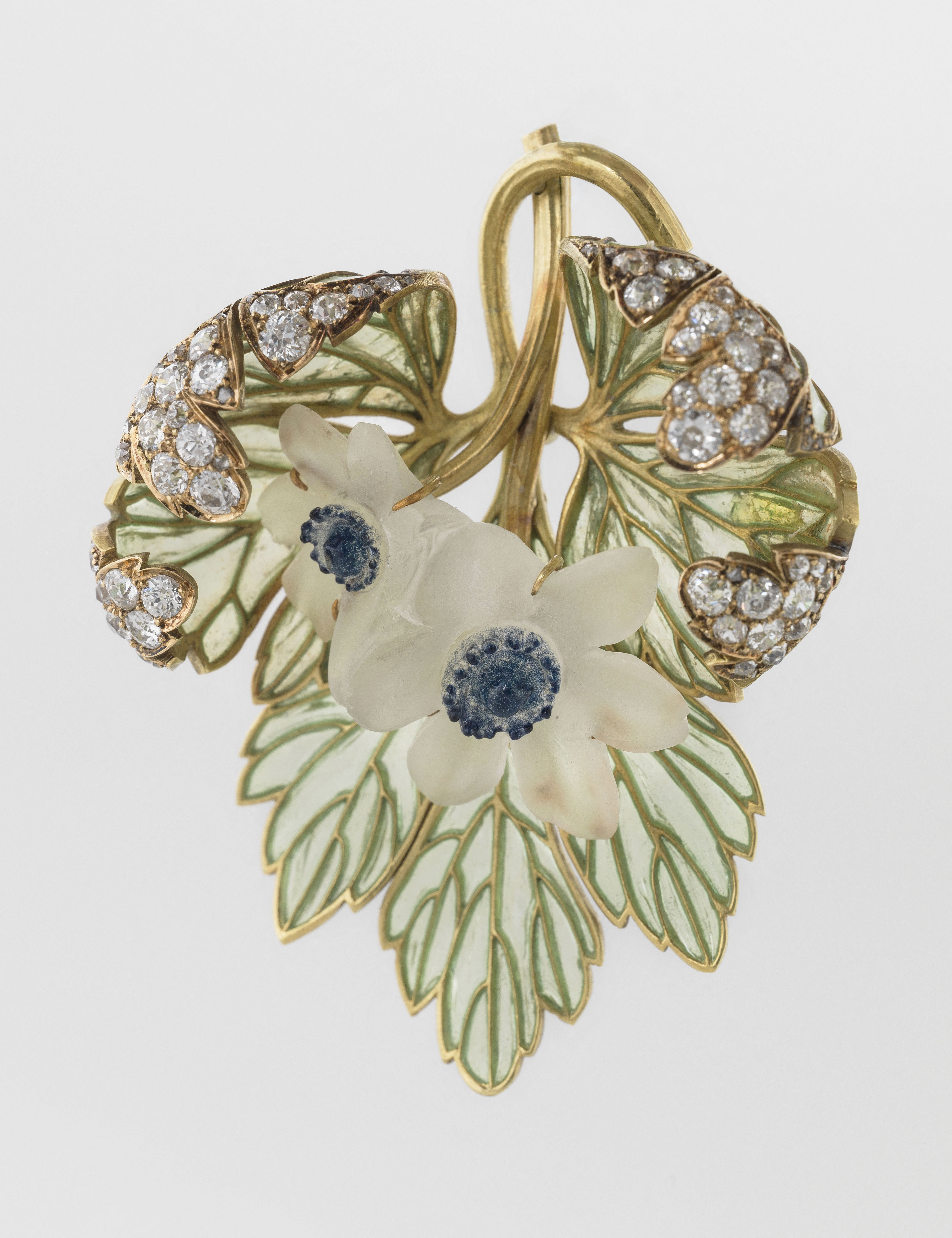
To begin collecting jewellery is not to accumulate, but to choose.

In a world where images move quickly and trends even faster, collecting asks for something quieter. Attention. Discernment. A willingness to wait. Collections are not defined by quantity, but by the clarity of their choices
A first principle: instinct
The first rule is simple, and difficult to follow consistently: to acquire only what one truly loves.
There is often a moment, however brief, where something shifts. A small internal recognition. The piece does not need to announce itself loudly, but it should remain. If it does not, it is rarely worth returning to.
A collection shaped without this instinct may appear coherent, but will lack a certain vitality. Jewellery is worn close to the body; it should resonate just as closely.

On quality and presence
Beyond instinct lies discernment. Materials, craftsmanship, proportion — these are not secondary considerations.
Whether one looks to established houses, to independent makers such as Lorenz Bäumer at Place Vendôme, or to contemporary Scandinavian designers, a consistent thread emerges: clarity of execution.
Quality reveals itself over time. In how a clasp closes, how a surface responds to light or in how a piece maintains its form after years of wear. Many of the most enduring houses, such as Cartier, Boucheron and Van Cleef & Arpels have long explored this balance between craftsmanship and imagination, each in their own way.
Wearing, not storing
It is tempting to associate collecting with preservation.
Yet jewellery, perhaps more than most objects, comes alive only when worn. Pieces kept solely for their potential future value remain incomplete; it is in movement, in daily life, in the quiet integration into one’s personal rhythm that the meaning of jewellery unfolds.
To collect, then, is not to archive, but to engage.
Five considerations on collecting jewellery
1. Instinct over impulse
Immediacy and urgency are not the same.
Allowing time between first encounter and acquisition often clarifies whether a piece truly belongs. What continues to hold attention tends to endure; what fades was perhaps only momentary.
2. An emphasis on quality
A collection gains strength not through accumulation, but through consistency.
This does not necessarily imply high jewellery. It may be found in a precisely constructed silver ring from a Scandinavian studio, just as much as in a piece set with precious stones. What matters is integrity of making.
3. The intention to wear
A piece that cannot be imagined in daily life rarely finds its place over time.
Jewellery acquires depth through use. It becomes associated with moments, with gestures, with time. Without this, it remains static, resolved, perhaps, but not fully realised.
4. Distance from speculation
While certain pieces may increase in value, this is rarely what gives them significance.
A collection shaped by anticipated returns often becomes constrained. Decisions grow cautious, even predictable. Taste, by contrast, requires a certain openness, and occasionally, a willingness to choose without certainty.
5. The role of patience
If something is almost right, it is often not right.
Allowing space to wait, to refine, and at times to save, tends to lead to stronger decisions. Over time, it is these decisions that define the character of a collection.

A broader landscape
To collect jewellery today is to move across a wide spectrum.
Alongside historic houses, there is an increasing presence of independent makers, regional traditions, and contemporary interpretations. Scandinavian jewellery, for instance, often introduces a clarity of line and restraint of form that contrasts with the ornamental richness found elsewhere.
A considered collection may well bring these worlds together: a sculptural gold piece from a Parisian atelier, alongside a quietly precise silver object from the North.
What connects them is not origin, but intention.
A final note on collecting jewellery
A jewellery collection reflects attention over time.
It is shaped not only by what is chosen, but by what is left behind. By moments of patience as much as moments of recognition.
In that sense, collecting becomes less about the objects themselves, and more about the refinement of one’s own way of seeing.
And always, at its most compelling, it begins with something simple: a piece that causes a small, unmistakable shift… and remains.


Leave a Reply