

Art Deco jewellery is often recognised immediately, yet not always fully understood. Its clarity can give the impression of simplicity, but this clarity is constructed through deliberate and highly controlled design decisions.
To read Art Deco jewellery is to move beyond appearance and consider how a piece is organised. Form, proportion, and contrast are not secondary qualities. They are the structure through which meaning is created. This approach builds on the principles outlined in Art Deco jewellery: geometry, modernity, and material contrast, where composition is understood as the foundation of design.

Structure before decoration
In Art Deco jewellery, design begins with structure. The placement of each element is determined before decorative qualities are considered. Stones, lines, and volumes are arranged to establish balance, creating a composition that feels resolved rather than assembled.
This approach differs fundamentally from earlier styles, where ornament often guided the design. As explored in The history of jewellery: from ancient adornment to modern design, earlier periods often prioritised symbolism and surface decoration. In Art Deco, decoration is integrated into the structure itself.
Understanding this principle allows the viewer to recognise why certain pieces feel coherent while others appear unresolved, even when made from similar materials.

The role of proportion
Proportion governs how a piece relates to itself and to the body. In Art Deco jewellery, this is carefully controlled. Elements are scaled in relation to one another, creating harmony without uniformity.
A central stone may anchor the composition, but it rarely dominates. Instead, it is balanced by surrounding forms, often through repetition or subtle variation. This creates rhythm within the design, guiding the eye without overwhelming it.
Well-resolved proportion is often what distinguishes refined pieces from more commercial interpretations. This distinction becomes particularly relevant in the context of Collecting jewellery: on taste, patience, and intention, where quality is not always defined by signature alone.
Line and direction
Line is one of the most defining elements of Art Deco jewellery. It directs movement and establishes order. Vertical, horizontal, and diagonal lines are used to create structure, often intersecting to form precise geometric relationships.
These lines do not merely outline forms. They determine how the piece is read. A strong vertical axis, for example, can elongate the perception of a brooch, while horizontal emphasis can create a sense of stability. This is especially visible in objects such as brooches, where composition and movement intersect, as discussed in Brooches: form, movement, and meaning.

Contrast as a design tool
Contrast is central to the visual language of Art Deco. It is not limited to black and white combinations, but can also emerge through colour, where materials such as lapis lazuli or turquoise create defined planes within a composition. It also extends to material, texture, and light.
The juxtaposition of diamonds with onyx, or polished surfaces with matte elements, creates tension within the composition. These material contrasts reflect broader developments discussed in Materials in jewellery: gold, silver, platinum, and gemstones, where innovation in cutting and setting allowed for greater precision.
Light plays a crucial role. Diamonds reflect and disperse light, while darker materials absorb it. This interaction creates depth, allowing flat compositions to appear more dimensional.
Space and restraint
One of the most overlooked aspects of Art Deco jewellery is its use of space. Empty areas are not gaps, but active components of the composition. They provide clarity, allowing individual elements to be perceived distinctly.
This restraint is what gives Art Deco jewellery its sense of control. Rather than filling every surface, designers allow the composition to breathe. The result is a balance between presence and absence.
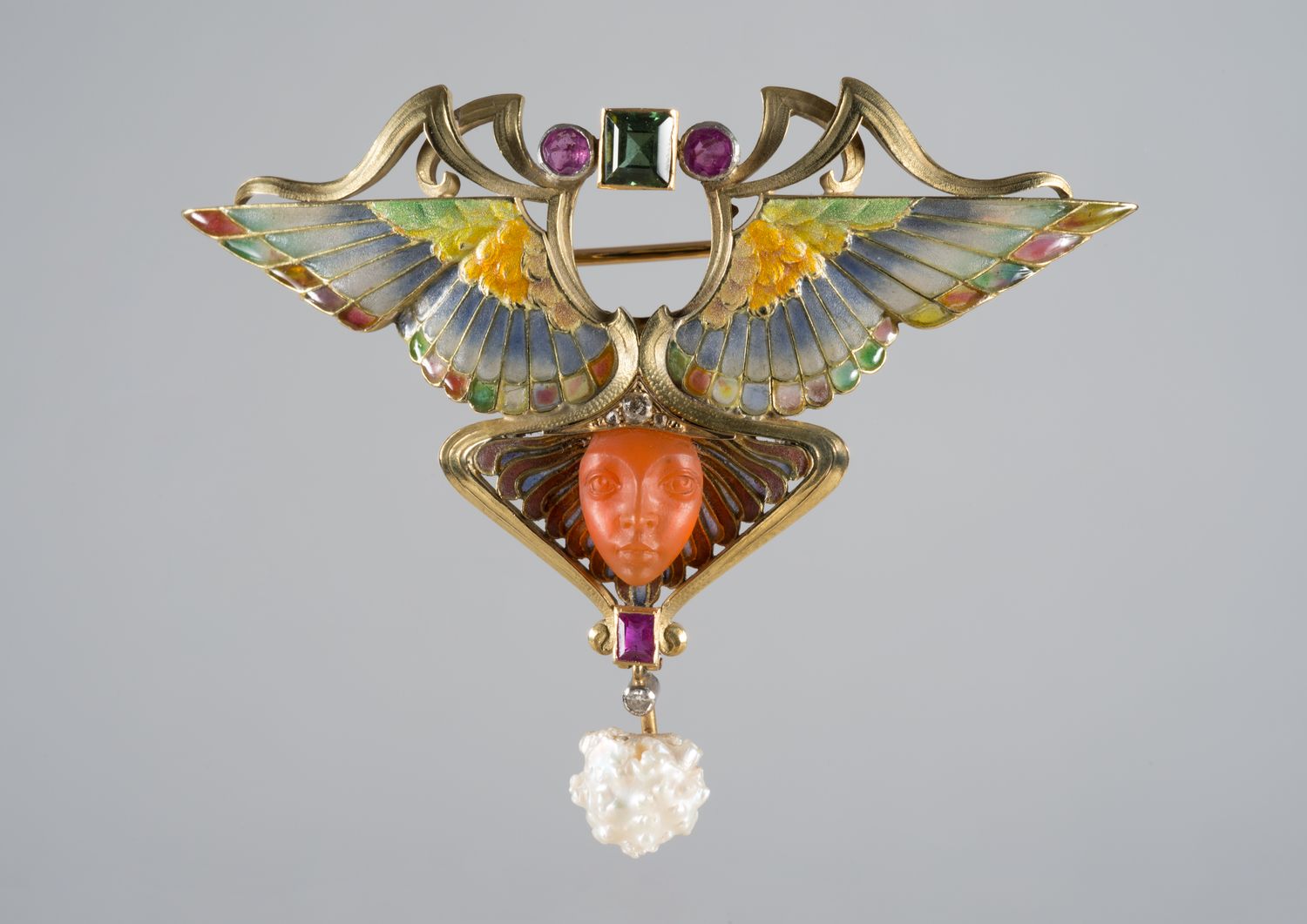
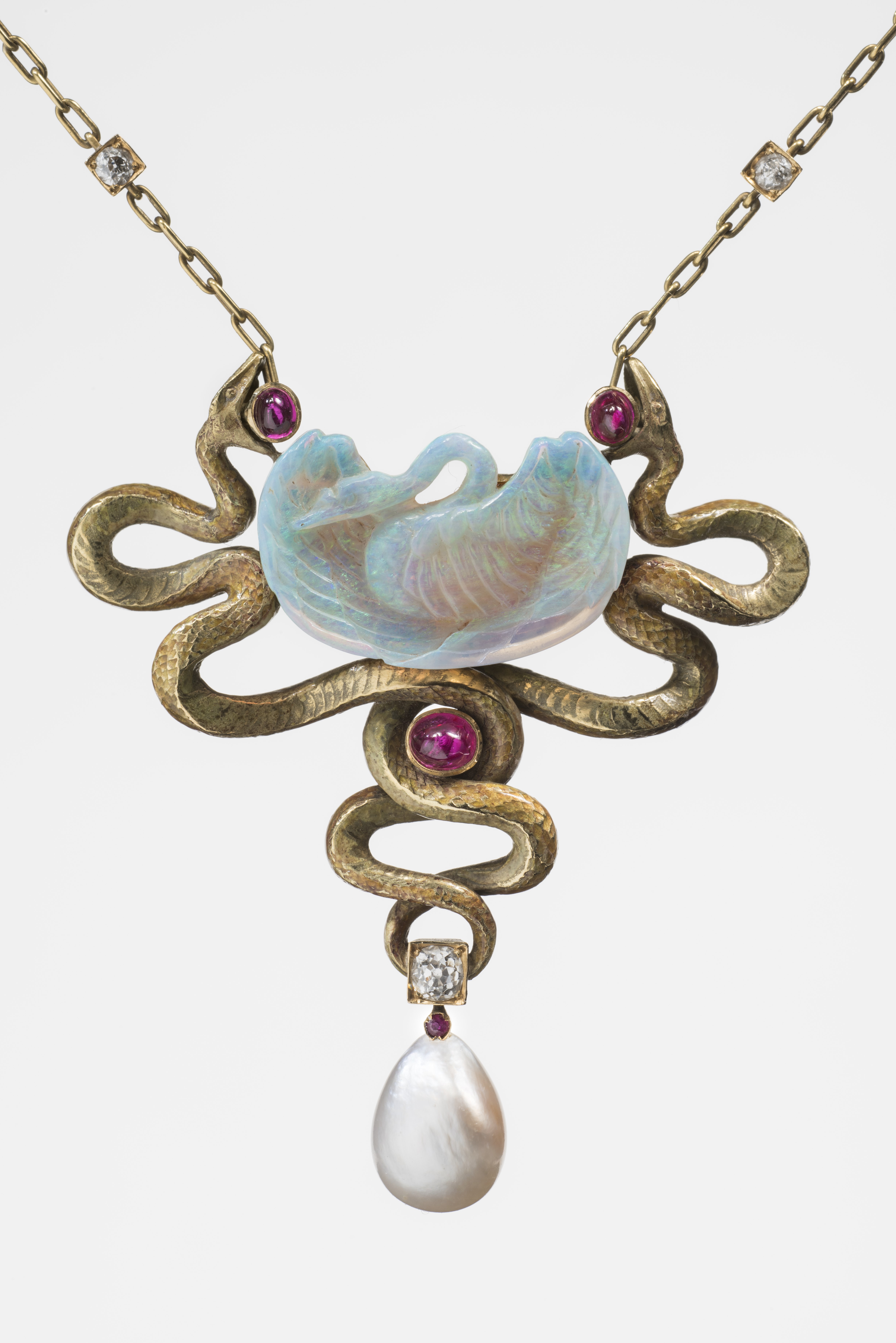
This approach contrasts with the density often found in Art Nouveau, as seen in the work of René Lalique and Georges Fouquet, where surface and symbolism played a more prominent role.
Reading beyond the signature
While many Art Deco pieces are associated with well-known houses such as Cartier, the principles of design extend beyond attribution. A piece does not need a signature to demonstrate quality.

By focusing on structure, proportion, and contrast, it becomes possible to assess a piece on its own terms. This perspective aligns with the broader considerations explored in Investing in jewellery: value, meaning, and perspective, where design integrity often outweighs brand recognition.
A language of precision
To read Art Deco jewellery is to recognise a language built on clarity and control. Every decision, from the placement of a stone to the direction of a line, contributes to a unified whole.
This precision is what gives the style its enduring relevance. It does not depend on changing tastes, but on principles that remain consistent.
Understanding these principles does not diminish the visual impact of Art Deco jewellery. It deepens it. What first appears as simplicity reveals itself as a carefully constructed balance of form, proportion, and contrast.


Leave a Reply